When people learn that I have a Master of Arts in Family Ministry, they usually assume I'm planning to go into church work. Pastoral counseling. Youth ministry. Some kind of role inside a church building.
I understand the assumption. It's the most common path for that degree.
It's not the path I took.
I want to tell you what that degree actually is, why I pursued it, and what it has to do with planning your wedding, your daughter's quinceañera, or whatever celebration you're thinking about hiring me for. Because the connection isn't obvious — and yet it's one of the most important things I can tell you about how I do this work.
What a Master's in Family Ministry Actually Studies
A Master of Arts in Family Ministry is not a degree about church programs. At its core, it's a graduate-level study of family systems — how families function, how they break down, how they heal, and how the people inside them experience the major life transitions that families navigate together.
The coursework covers things like:
- How multi-generational family systems pass values, conflicts, and patterns from grandparents to parents to children, often without anyone realizing it's happening
- How cultural and religious traditions shape family identity and how those traditions get negotiated when two families with different traditions come together
- How conflict resolution actually works inside families — what makes it succeed, what makes it fail, and why "just talk it out" almost never produces the outcome people hope for
- How major life transitions (marriage, the birth of a first child, the coming-of-age of a daughter, the death of a parent, the marriage of an adult child) reshape family structures and expose the dynamics that were always there
- How honor, respect, and acknowledgment function as currencies inside families — particularly inside cultures where these concepts carry weight that English-speaking American culture often underestimates
- How to hold space for grief, joy, fear, and pride at the same time, in the same room, often inside the same person
If you're thinking that sounds like exactly what's happening at every wedding I've ever attended — yes. That's the point.
Why I Pursued the Degree
I didn't pursue this degree because I was thinking about the event planning business. I pursued it because I had become a Christian a few years ago, and I wanted to understand — at a serious, formal, academic level — how families actually work and how faith and family interact in the real lives of real people.
I was raised in a Cuban family. I had spent my whole adult life inside multi-generational Hispanic family dynamics, watching them work and watching them strain, navigating my own family's transitions, helping my sister get married, planning my daughters' celebrations, holding the gatherings my extended family came home to.
I wanted to understand more of what I was already living inside.
The degree gave me a vocabulary for things I had only intuited before. It gave me frameworks for what I had been doing instinctively for two decades. It taught me that the things I had noticed about family dynamics — the things my friends and cousins had noticed me being unusually good at — were actual phenomena that researchers and clinicians and pastors had been studying carefully for generations.
What I didn't expect was how directly the training would map onto the work I'd already been doing my whole life.
Until one day, when my fiancé Alex asked me again why I wasn't doing event planning as a real business, it hit me. The thing I had spent twenty years doing for free — and the thing I had just spent years studying formally — were the same thing.
What I Now Understand About Weddings
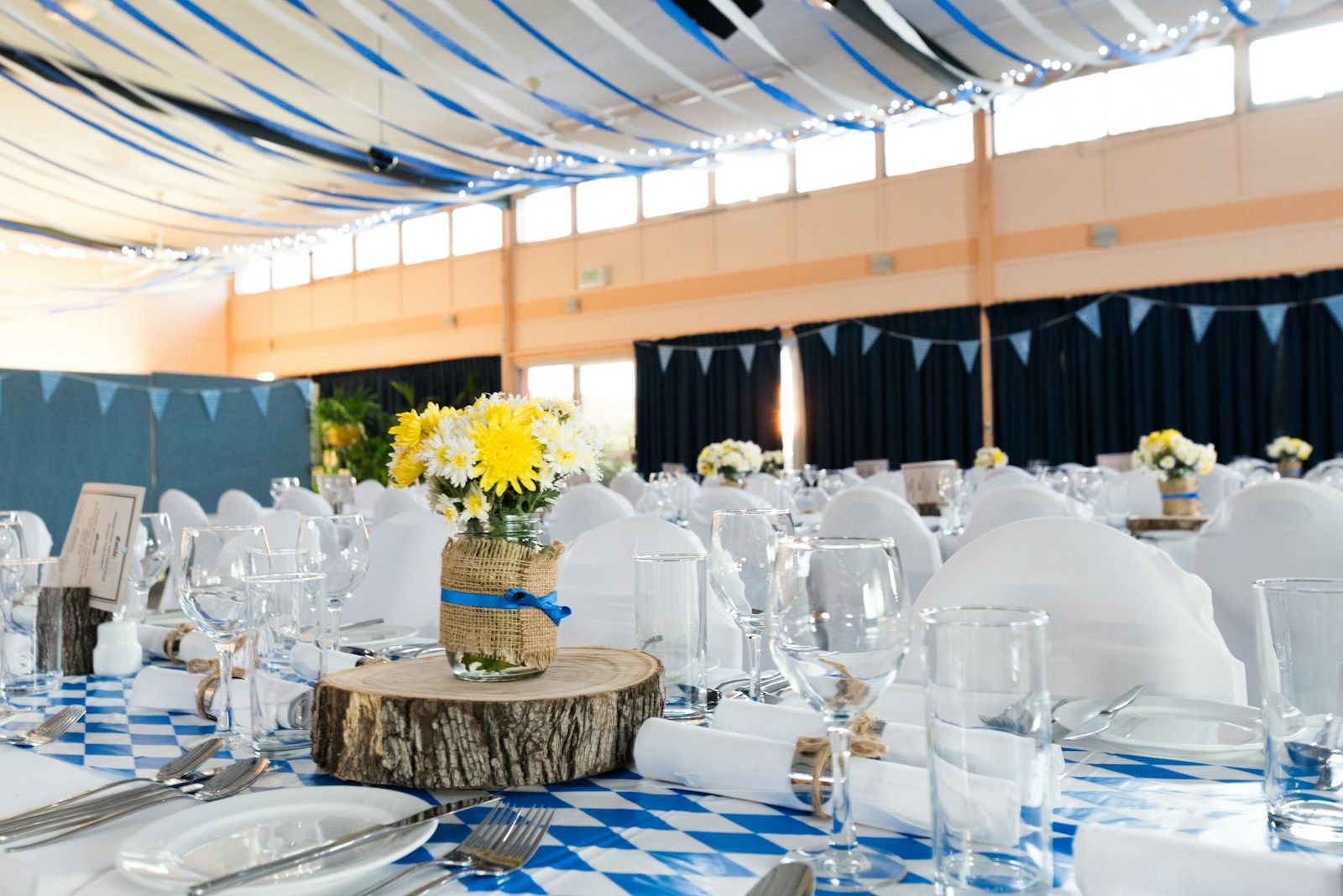
A wedding is not just a celebration of two people getting married.
It's a public negotiation between two family systems that, until that day, had operated independently. It's the moment when those systems begin to merge, with all the friction that merging always produces. It's the moment when every dynamic that has been operating quietly inside both families for decades suddenly becomes visible because the wedding forces decisions that expose the dynamics.
Who walks the bride down the aisle? In some families, this is straightforward. In others, it's a question that has been quietly tense for years and is now being asked in front of two hundred people.
Whose family pays for what? In some families, this is decided in five minutes. In others, this question carries fifty years of unspoken expectations about who has authority, who has standing, who counts.
Who sits where at the rehearsal dinner? In some families, this is logistics. In others, this seating chart is the most carefully political document anyone in the family has ever drafted.
What language is the toast given in? In bilingual families, this question is not casual. The grandmother who only speaks Spanish needs to feel honored. The new in-laws who only speak English need to feel included. The bride needs both at the same time.
Will the priest speak about Catholic teaching or keep the ceremony more general? In some families, this is the difference between the marriage being recognized and the marriage being grudgingly attended.
Multiply these by fifty more questions, and you have a wedding day.
What I learned in graduate school is that every one of those questions is a family systems question. Every one of them touches on power, respect, identity, history, faith, and love. Every one of them has the potential to either bring families closer together or surface old wounds. Every one of them will be felt long after the wedding is over.
Most planners are trained to handle the logistics of these questions. They know how to set up a seating chart, schedule a multi-language ceremony, negotiate vendor pricing. The logistical skill matters. But the logistical skill is not the same as the family systems skill.
The family systems skill is what makes the difference between a wedding that is well-executed and a wedding that actually heals something or builds something inside a family.
What I Now Understand About Quinceañeras
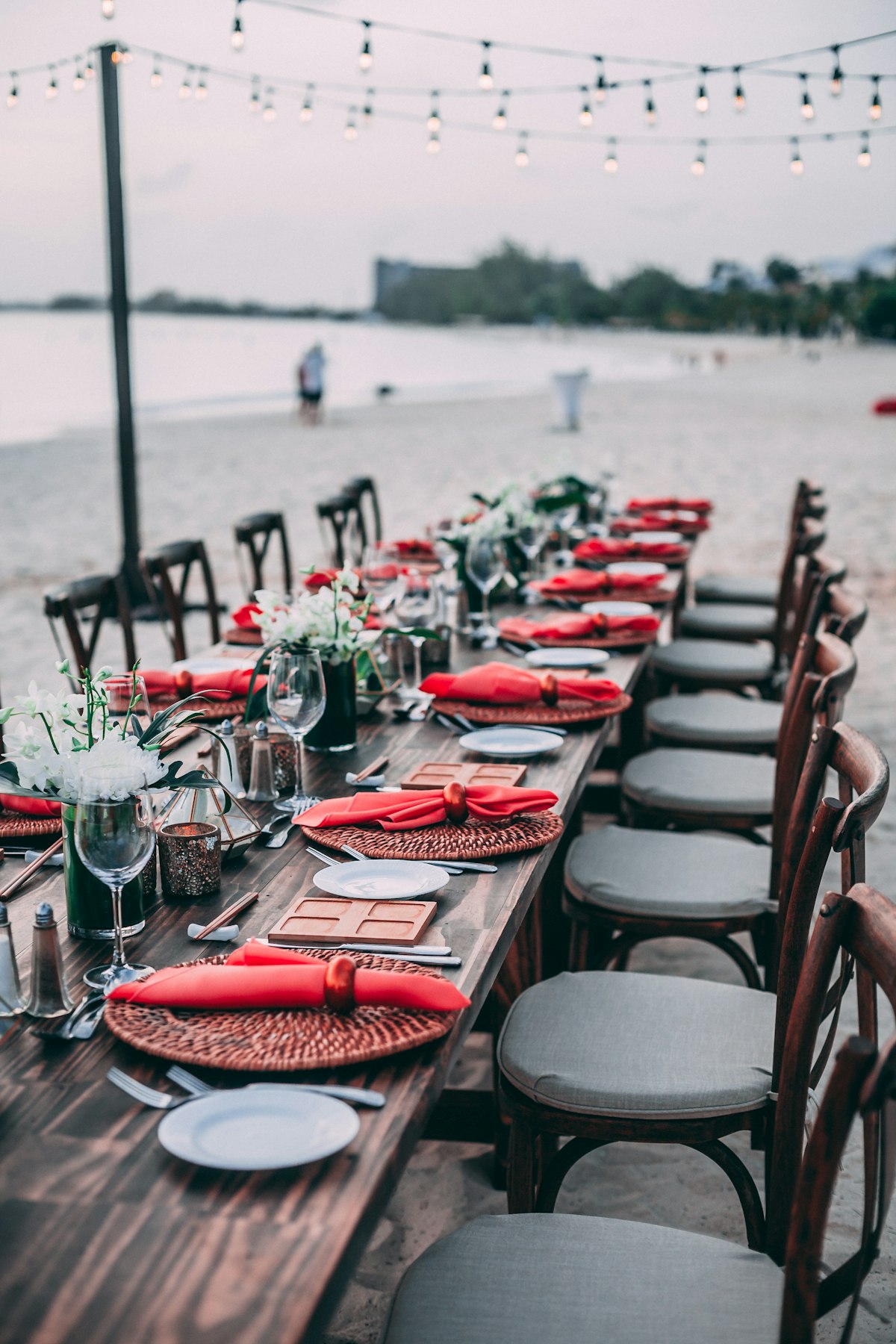
A quinceañera is even more concentrated.
In one afternoon and evening, a fifteen-year-old daughter is being formally presented to her family and community as a young woman. Her mother is making peace with the fact that her child is no longer a child. Her father is dancing with her in the formal vals — often the first time he has danced with her this way and possibly the only time he ever will. Her grandmother is watching a tradition she lived through herself being passed forward to a granddaughter she may have feared would not carry it. Her godparents — her padrinos and madrinas — are being publicly acknowledged for their role in shaping the young woman this celebration is honoring.
Each of those people is processing something different inside the same room. The mother is grieving the end of her daughter's childhood while celebrating the beginning of her adulthood. The father is reckoning with the speed of time. The grandmother is feeling the weight of culture. The godparents are feeling honored and old at the same time. The quinceañera herself is trying to be everything everyone expects her to be while also being herself.
A planner who treats the quinceañera as a logistical event will execute the day competently and miss the meaning entirely.
A planner who has trained formally in multi-generational family systems will design the day so that each of those people gets to experience their own version of the meaning, in their own way, at their own moment.
The vals isn't just choreography. It's a structured ritual where a father and daughter say something to each other that they may not say in words for the rest of their lives.
The padrino acknowledgments aren't just a list of names being read aloud. They're the public declaration of a community that has shaped this young woman, and the acknowledgment that she is now part of that community as an adult, not as a child.
The mass — when there is one — isn't just the religious component of the celebration. It's the spiritual center where the young woman is offered to God as an adult woman of faith, and where her family is asking for blessing on the woman she is becoming.
Each of these moments has weight that goes beyond the logistics. My training taught me how to hold space for that weight, how to design the day so the weight is honored rather than rushed past, and how to communicate with each generation in the language and tone that respects what they are experiencing.
How This Shows Up in Our Conversations
When you and I sit down for the discovery call, I'm going to ask questions that might surprise you.
I'll want to know about your family before I want to know about your venue. I'll want to know who's contributing financially and what that means inside your family's dynamics, not because I'm being nosy but because I have learned that money and authority are deeply linked inside family systems and getting that dynamic wrong is one of the main ways weddings produce lasting damage. I'll want to know if your parents are divorced, if there are estranged relatives, if there are step-family relationships I should be aware of. I'll want to know if your families share the same faith or different faiths, the same first language or different first languages, the same expectations about scale or different expectations.
These are not invasive questions. They are the questions that determine whether the day will go well not just operationally but emotionally.
I'll also tell you something honest about what I've learned, which is that no family is uncomplicated. The families I've worked with that look the most pristine on the outside often have the most carefully managed dynamics underneath. The families that look the most complicated often have actually done the hardest work of acknowledging their dynamics and making peace with them. The shape of the complexity matters more than the existence of complexity.
What I will not do is take sides between you and your mother, or you and your future mother-in-law, or you and your father. I am not a family therapist, and the wedding planning relationship is not a therapy relationship. But I have been trained to recognize the dynamics that show up at weddings, to design around them, and to handle the moments when they surface in ways that protect what matters most — which is your relationship with the people you love.

How This Shows Up On the Day
On the day of your wedding or your daughter's quinceañera, the family ministry training shows up in ways most clients never see.
It shows up in how I greet your grandmother when she arrives. I will know whether to address her as señora or by her first name, whether to greet her in English or Spanish, whether she expects me to defer to her or treat her like a peer. I will know this because I asked the right questions during planning, and because I was trained to know what those questions were.
It shows up in how I handle the moment your future mother-in-law tries to direct the photographer in a way that conflicts with the bride's preferences. I will not take sides. I will not embarrass either of them. I will redirect the moment in a way that honors both of them and protects the bride's vision without making the mother-in-law feel diminished. That redirection is a learned skill, not a personality trait.
It shows up in how I coordinate the parent dances at the reception. I will know that for some families, the father-daughter dance is the most important thirty seconds of the entire celebration, and I will protect those thirty seconds with my whole attention. I will know that for other families, the father-daughter dance has weight nobody talks about because the relationship has been complicated, and I will handle that moment with the kind of care it deserves.
It shows up in how I introduce your padrinos and madrinas at the quinceañera. I will know the difference between a padrino who is a beloved uncle being formally acknowledged after thirty years of presence in the family and a padrino who is a relatively new family friend being honored for a specific contribution. The acknowledgment will be calibrated accordingly. The audience will register the difference. Your padrino will feel seen in the specific way they need to be seen.
These are not features I can put in a marketing brochure. They are the texture of what professional family-aware coordination actually looks like in practice.
What This Means for You
If you are planning a celebration where the family dynamics are simple — everyone gets along, both sides are aligned, the financial contributions are clear, the cultural and religious questions are settled — you may not need a planner with formal family ministry training. Plenty of competent planners can execute that wedding well.
If you are planning a celebration where the family dynamics are not simple — and most are not — the training matters more than you may realize.
If your parents are divorced and both are contributing financially, and the question of who walks you down the aisle is genuinely complicated, the training matters.
If your future in-laws speak a different first language than your parents, and the rehearsal dinner needs to feel inclusive to both sides, the training matters.
If your grandmother is in declining health and may not be physically able to participate the way she would have ten years ago, but you want to honor her presence as fully as possible, the training matters.
If your faith is important to you and your partner is from a different faith background, and the wedding ceremony needs to honor both without forcing artificial blending, the training matters.
If your daughter is having her quinceañera and the dynamics between her, you, and your mother span three generations of cultural negotiation about what it means to be a Latina woman in America, the training matters.
These are not edge cases. These are the actual conditions of most modern American Hispanic families, and many non-Hispanic families as well. They are the conditions under which weddings and quinceañeras are actually planned and lived through.
A planner who is trained to navigate these dynamics is doing different work than a planner who isn't. Both can be good planners. They are not the same.
Why I'm Telling You This
A lot of planners would treat the master's degree as a credential to mention briefly on an about page and move on.
I'm choosing to write a whole article about it because I want you to understand what you are actually getting when you hire me, beyond the logistical execution that any competent planner can deliver.
What you are getting is someone who has spent years studying — formally and academically, not just through experience — the dynamics that show up at every wedding and every quinceañera. Someone who can name what is happening in a moment that other planners can only feel without naming. Someone who has been trained to design celebrations that honor the emotional architecture of families, not just the visual architecture of events.
I do not say this to suggest I am better than other SWFL planners. There are many excellent planners in this region, and I am genuinely new to running this as a formal business. What I am saying is that this particular training is rare in the planning industry, and it directly addresses the dimension of celebration planning that most clients underestimate until the day arrives.
If you are the kind of person who has been quietly worrying about how the family dynamics at your celebration will be handled — if you have been wondering whether the planner you hire will know how to navigate the complicated parts as well as the beautiful parts — I want you to know that someone is paying attention to that dimension of the work. That someone has trained for it. That someone is not afraid of it.
A Closing Thought
Twenty years ago, when I planned my first event — my own baby shower at eighteen — I noticed that the people who came were doing something more than attending a celebration. They were taking a break from their busy lives to be present with each other. They were sharing memories. They were eating together. They were laughing. They were doing the thing families do when they are given the space and the structure to do it.
I did not have a name for what I was witnessing back then. I just knew it mattered.
Twenty years later, I have studied formally what I saw that day. I have read the research, learned the frameworks, written the papers, taken the exams, earned the degree.
What the degree confirmed for me is that the thing I noticed at eighteen was real and important and worthy of a lifetime of attention.
The wedding you are planning, the quinceañera you are dreaming about for your daughter, the milestone celebration you have been thinking about for years — these are not just events. They are the moments when your family does the work of being a family, in front of witnesses, at a level of intensity that ordinary life does not produce.
My job is to take that work seriously.
The Master's degree is one of the ways I prepared myself to do that.
Now you know why I have it, and what it has to do with planning your wedding.
If you have questions about how this would show up in your specific celebration, the discovery call is the right place to ask them.