For twenty years I’ve been the mother, the sister, the aunt, the cousin somehow ending up in charge of every gathering in our family — and watching the women I love run themselves into the ground hosting their own. I built Monarch Celebrations so the woman who planned the celebration finally gets to be in it.
I've been planning gatherings my entire life — family celebrations, church events, my older daughter's quinceañera, baby showers, gender reveals, holiday parties of fifty-plus people, Lab Week celebrations every year for a decade for the healthcare team I've been part of. I've been that friend, that cousin, that mom who somehow ended up running the logistics on every event in our orbit for the last twenty years. But until 2026, I never called myself a planner. I just did it because I love it.
"This is the story of why that's about to change."
Most planners build their about pages around credentials, awards, and impressive-sounding portfolios. I'm going to do something different. I'm going to tell you exactly where I am in my career and let you decide if I'm the right fit.
Monarch Celebrations launched in 2026. We're a brand-new business. I don't have a portfolio of a hundred completed weddings yet. I don't have a decade of testimonials with the business name on them. I'm actively pursuing my Association of Bridal Consultants certification through 2026 because credentialing matters and I take that seriously.
What I do have is almost twenty years of doing the work — informally, for the families and communities I love, for free, because I couldn't help myself. I also have ten years as a medical technologist, three formal degrees that all relate directly to this work, and a level of operational discipline I've developed in a profession where there's no room for missed details.
Starting Monarch Celebrations is my honest answer to a question my fiancé Alex, my daughters, and my church community have been asking me for years: Why aren't you doing this for real?
So I am.
The first event I ever planned, I was eighteen years old and six and a half months pregnant. It was my own.
Nobody hired me. Nobody told me to do it that way. I just couldn't help myself — the decorations, the menu, the music, the guest list, the RSVPs, even the favors for guests to take home. Every detail had to be thought through.
What stuck with me from that day wasn't the decorations. It was watching the people I loved put a pause on everything else in their lives — work, errands, the running list of things they were worried about — and just be present with each other. Eating together. Laughing. Telling old stories. Some of the women in the room had never been to a baby shower before, and they played games they'd never played in their lives. I remember thinking: this is what a celebration is supposed to do. It pulls people out of their ordinary hours and brings them home to each other for an afternoon.
That was almost twenty years ago. My oldest daughter Gabi is eighteen now. My younger daughter Gracie is ten.
Since that day, I've been the friend, the cousin, the auntie, the mom who somehow ended up running logistics on every gathering in our orbit. My sister's beach wedding. Gabi's quinceañera. Birthday parties for nieces and nephews. Baby showers for friends. Gender reveals. Holiday gatherings of fifty-plus people. Sunday afternoons at home that turned into something. Lab Week celebrations every year for the healthcare team I've been part of for over a decade.
None of it for pay. All of it because I couldn't help myself.
And what I realized, slowly over the years, is that this isn't something I do. It's something that flows out of me. What's new is finally putting the business card on the table.
"Years from now, your family will gather and ask, 'do you remember that day?' My job is to make sure the answer is yes."
Here's what I know from being the one in charge of celebrations my whole life:
When you're the host of your own celebration, you don't get to enjoy it.
You pay for everything. You plan everything. You coordinate everything. You're the one fielding the question from the caterer, the one wondering when the photographer is going to arrive, the one who realizes at 8pm that nobody started the music. By the time the celebration is over, you're standing in your kitchen surrounded by dirty dishes asking yourself, did that just happen? I missed it.
I can say this with conviction because I've been there. So have most of the mothers, aunts, sisters, and grandmothers I know. We pour ourselves into making the day beautiful for everyone else, and then the day passes and we're not even sure we were fully in it.
That's the part of celebration planning nobody talks about. And it's the part I most want to take off your shoulders.
A celebration is not a Pinterest board. It's not a sequence of pretty photos for social media. It's an opportunity — and time is a non-renewable resource. The hours your family will spend together at your daughter's quinceañera, your son's wedding, your mother's milestone birthday don't come back. What gets created in those hours is something the people in the room carry with them forever. Years later, they gather, and they say, do you remember that day? That's the test. That's what we're trying to make happen.
A lot of planners in this industry think about events in terms of dollar signs and aesthetics. I think about them in terms of the imprint they leave on the heart of a family. Both can be true, but only one of them is actually the point.
My job is to handle every detail so faithfully that you don't have to think about a single one of them. So you can be present. So you can hug your mother. So you can dance with your daughter. So that when the celebration is over, you can take a breath and feel that quiet satisfaction — we did it. It happened. It was beautiful — and let it stay with you.
That's why I do this. Not for dollar signs. For the imprint a well-celebrated day leaves on the heart of a family.
The event I keep returning to as the one that proved this to me was my older daughter Gabi's quinceañera.
Sixty guests. The theme was gold and light pink. I booked the photographer and discovered the venue had a list of animals available for outdoor portraits, so we rented a horse. The pictures took place at two locations. A paella chef came to the celebration and cooked the food on-site — the way it's done in our culture, where the meal isn't catered in pre-made trays but prepared in front of you, and the smell of it is part of the celebration. I set up the tables myself. I designed the décor. I coordinated every vendor.
Two surprises were hidden inside the day. I'd booked a professional choreographer who arrived with a dancer and led the guests through an hour of dancing — even the family members who had told me they didn't dance ended up on the floor. And I'd booked a mariachi without telling Gabi. Every part of her quinceañera was her decision except for that one thing. I wanted her to hear the music start without warning.
The cousin's wedding I planned came together with similar care — a fifteen-thousand-dollar budget across nine months, beach permit, decoration vendor, officiant, live violinist, photographer, drone videography, full reception coordination. My sister's beach wedding came together in about a month. My oldest daughter Gabi's photo backdrops have been built with my own hands. The Lab Week celebrations I've coordinated for our healthcare team's activity committee have run a full week each year for years — full corporate event logistics for hundreds of healthcare professionals, scheduled around the actual demands of patient care.
These events have one thing in common: I noticed the details that other people miss, I took the operational weight off the people I love so they could actually be present, and something happened in those rooms that the people in them are still talking about years later.
Outside of the celebrations, I've spent the last ten years as a medical technologist working in a clinical laboratory.
That work has shaped how I plan events more than any planning course could. In the lab, you operate under regulatory standards where there's no room for error and no excuse for missed details. You build systems for handling complex logistics under time pressure. You communicate calmly across language barriers, cultural differences, and stressful moments because the people on the other side of the conversation are scared, overwhelmed, or hurting. You learn that being detail-oriented and being emotionally present are not opposites — they're the same skill applied at the same time.
That decade of professional discipline is in the room with me at every event.
I also hold three degrees that map directly onto this work: an Associate of Science in Clinical Laboratory Science, a Bachelor of Science in Health Administration, and a Master of Arts in Family Ministry. The Family Ministry degree in particular trained me specifically in the dynamics of multi-generational family systems — the same dynamics that show up at every wedding, every quinceañera, every milestone celebration. The Health Administration degree is the operational backbone behind how I structure engagements. The Clinical Laboratory Science training is where the discipline came from.
I'm telling you all this not because I want the page to read like a résumé. I'm telling you because the words "I'm new to event planning as a business" can read two ways — as the disclosure of a hobbyist trying something new, or as the disclosure of a serious professional opening her first formal practice. I want you to know which one this is.
It's the second one.
If you want to see how this thinking actually shows up in planning — at the cornerstone level and in two specific situations brides and mothers most often face.

How graduate training in family systems shapes the way I plan weddings and quinceañeras — beyond logistics, into the emotional architecture of families.
Read the cornerstone essay →

If your parents are divorced, you are not the exception — you are the rule. The five family patterns we plan around, what we will never do, and what we need from you.
Read the divorced-parents essay →
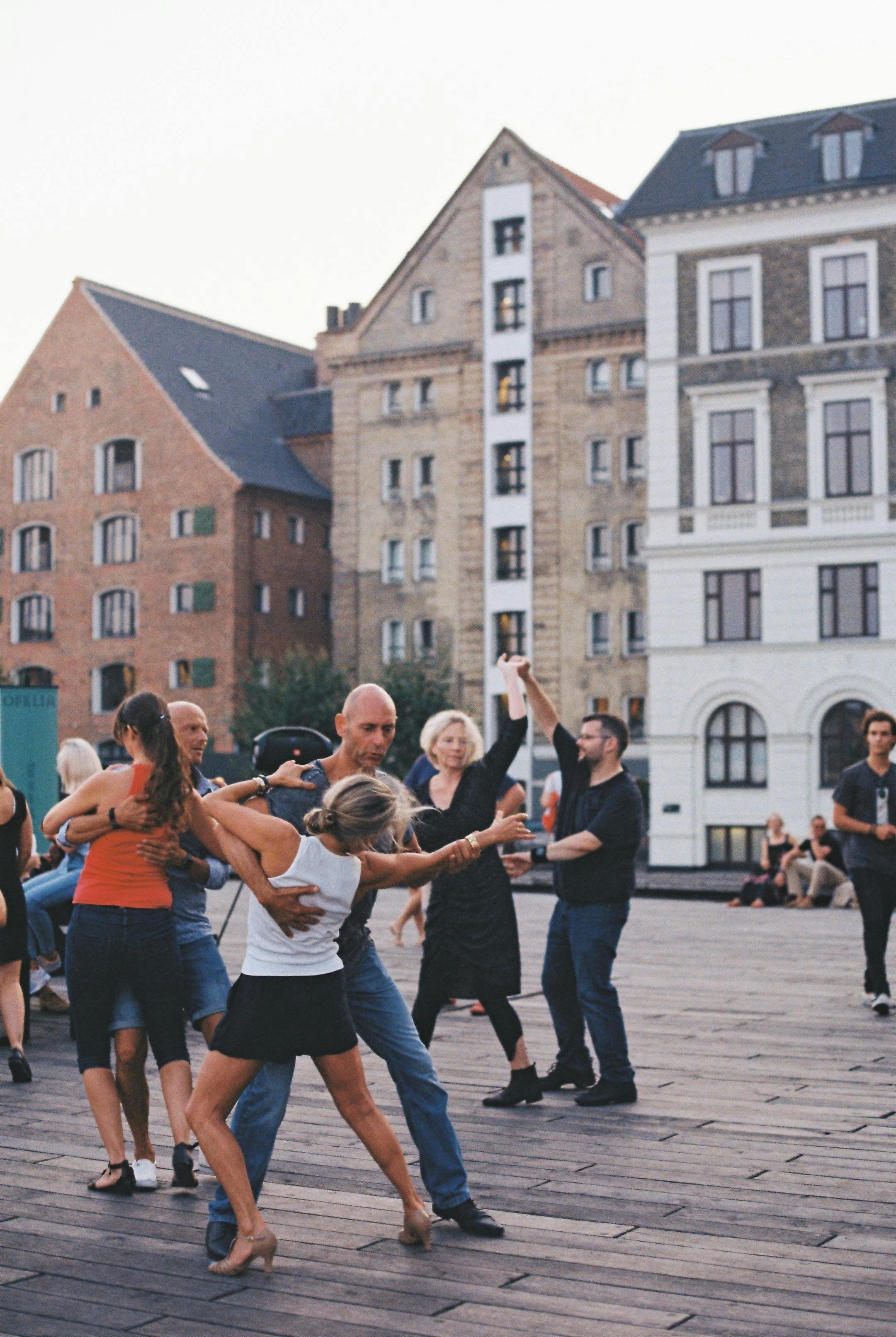
The abuela's vision, the mother's bridge work, the daughter's self-expression — three valid generational visions inside one celebration, and the structure that makes it plannable.
Read the three-generations essay →Here's the part I think a lot of planners don't tell you. New isn't worse. New is different. And in some specific ways, new is meaningfully better.
What you don't get is a hundred completed weddings under the Monarch Celebrations brand, a portfolio full of bridal magazine features, or a decade of testimonials with the business name on them. Those are coming. They're being built right now, with the founding-year clients who are choosing us before everyone else.
I'm Cuban. Family is from the Havana area. I grew up in a culture where there's always food, always coffee, always laughter — even, as the saying goes, when we're underwater. Family at the core of everything.
I'm a mother of two. Gabi is eighteen. Gracie is ten. They are, in different ways, my best teachers about how to plan around the people who matter most.
I'm engaged to my fiancé Alex. He runs the operational, technology, and marketing side of Monarch Celebrations. I'm the face of the work. We're founders together. He's the backbone. I'm the one who'll be sitting across from you at the discovery call.
I'm a medical technologist of ten years, with an Associate of Science in Clinical Laboratory Science, a Bachelor of Science in Health Administration, and a Master of Arts in Family Ministry. The combination shapes how I do everything.
I'm building something I've waited my whole adult life to build. And I'm going to be honest with you every step of the way about where we are in that journey.
In an industry full of inflated credentials, I'd rather show you exactly where I am on the path than overstate it.
Graduate study of multi-generational family systems — the dynamics that show up at every wedding, quinceañera, and milestone celebration.
The operational backbone behind how engagements are structured, scoped, and billed.
Where the no-room-for-error discipline came from — and the foundation for ten years working in a clinical lab.
Association of Bridal Consultants — the most recognized wedding-planner credential in the U.S. Currently completing the Certified Wedding Planner curriculum.
Local business association. Membership application in progress for 2026.
International Live Events Association. Application submitted. Florida chapter active in Tampa & Orlando.
The next tier in the ABC certification ladder. Targeted for 2027 with portfolio in place.
Industry-gold credential. Requires 3 years of full-time experience. Targeted for 2029.
Registered Florida LLC with general liability insurance. W-9 and Certificate of Insurance available on request for corporate engagements.
If you're planning a wedding, quinceañera, corporate event, or milestone celebration in Southwest Florida — and you're open to working with someone who will treat your event like it's the most important one on her calendar — let's talk.
Because if you book us in our founding year, it actually will be.
The discovery call is free, takes thirty minutes, and has no obligation. We'll talk through your event, identify which package fits, and surface anything that affects pricing — so by the time the proposal arrives in your inbox, there are no surprises.
— Jessica
Monarch Celebrations · Cape Coral, FL